Skip to Content
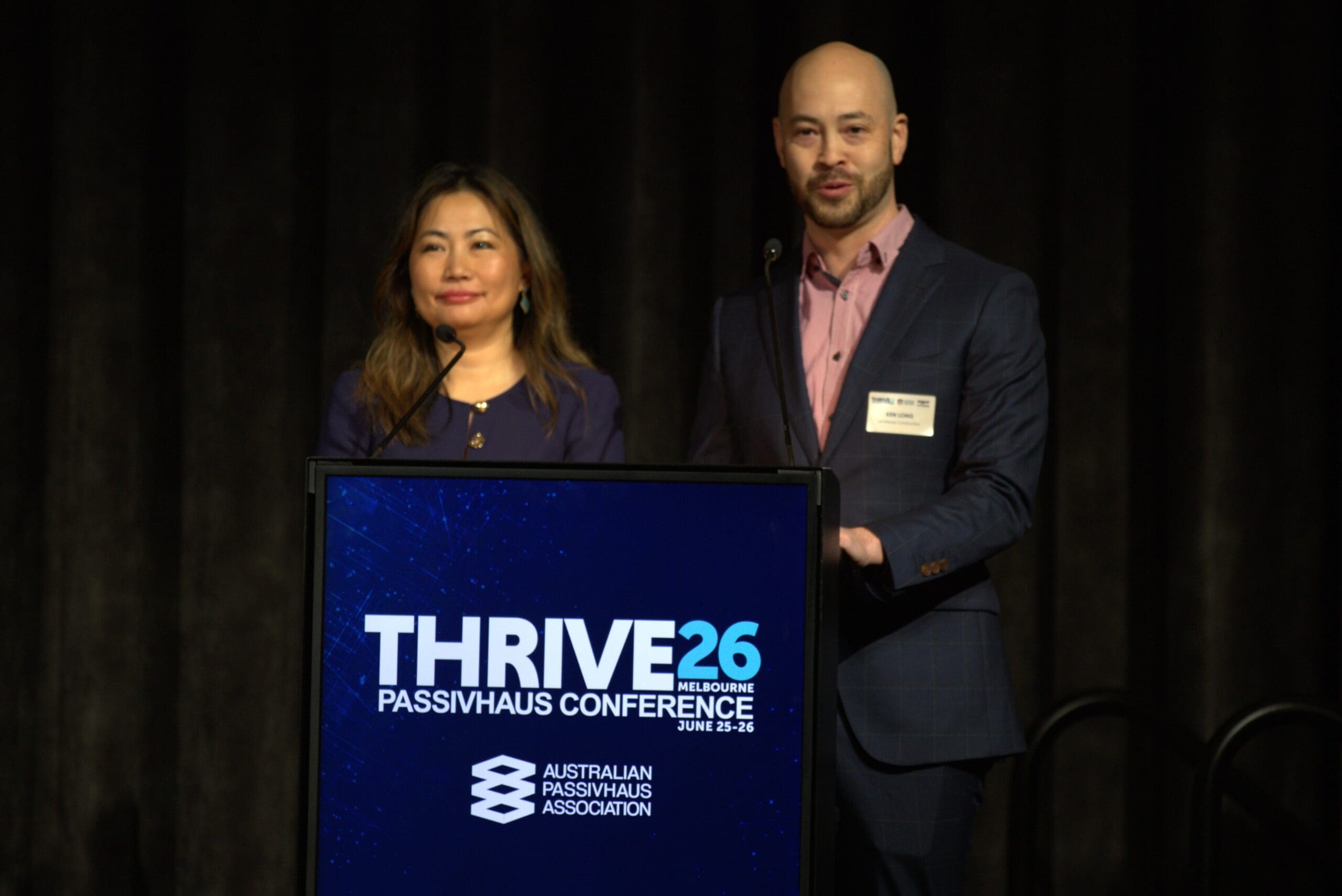
woman and man stand in front of a podium with "thrive26" logo

High-performance building has long been perceived as unattainable in Australia.

However, Sustainability Group Manager at Northrop, Shanica Saenrak Hall, has seen a positive perception shift over recent years, particularly through the growing adoption of Passive House (also known as Passivhaus) principles.

When Passive House first emerged in Australia in the mid-2000s, it was widely regarded as a European concept unsuited to our climate. That belief created a degree of complacency around high-performance design and construction. As the methodology has evolved to better reflect Australian climate conditions, confidence has grown. The gap between upfront cost, accessibility and long-term value continues to narrow, reflected in the growing number of Passivhaus-certified buildings appearing across the country.

Regulation has also played an important role. The National Construction Code (NCC) has steadily raised expectations around building performance, including in 2022 with the increase in minimum NatHERS energy rating for new homes from 6 to 7 stars. The NCC also addresses unintended air leakage through building-sealing provisions, including Part J5 of Volume One, and Part 13.4 of the ABCB Housing Provisions. NCC 2025 has continued that trajectory with tighter requirements for thermal performance and insulation.

woman presenting on stage in front of podium with Thrive 2026 logo

Shanica Saenrak Hall, emcee at the recent Australian Passivhaus Association’s event, Thrive 2026. Photo credit to Shaun Knott.

Comfort first, complexity second

Last month, the Australian Passivhaus Association (APA) held its annual forum, THRIVE. The largest gathering of Passivhaus certified professionals in APAC, the event focused on sharing expert insights, industry innovation and delivery of impactful principles across developments and retrofits. Shanica, who emceed day one of the event, noticed a common theme: high-performance building works best when it’s practical, not just technical. Clients, owners, operators and occupants don’t need to understand the science behind orientation, shading or building fabric. They simply want buildings that are comfortable, energy efficient and sustainable.

As Burkard Hansen, co-founder of Thrive Places and CEO at CarbonLite, put it: “People order a cake because they’ll enjoy eating it. They don’t need to understand every step in the recipe.”

The role of the design team is to understand that complexity, applying expertise in orientation, shading, airtightness, insulation and occupant needs to make better decisions from the outset. Shanica notes this thinking isn’t limited to housing, it applies just as well to civic, commercial and industrial buildings.

Building for a more sustainable future

Australia now has just over 140 certified Passivhaus properties, with another 200 in development around the country. First developed in Germany in the 1990s, Passivhaus standard can be summarised by five key design principles:

• Continuous, high-performance thermal envelope
• Airtight construction
• High-performance windows and doors
• Minimised thermal bridging
• Controlled mechanical ventilation with heat recovery

Together, these principles help maintain stable indoor conditions, provide high levels of occupant comfort and indoor air quality, and substantially reduce heating/cooling demand.

Shanica expects the adoption of these principles to spread well beyond new residential builds over the next decade, into seniors living, prefabrication, adaptive reuse and heritage upgrades. Even in instances where formal certification isn’t the goal, simply because they produce healthier, more comfortable, more energy-efficient buildings.

The way Passivhaus is designed, it’s a system. If you lack something, you need to compensate elsewhere. It’s a systemic design, with complementary levers.” – Shanica Saenrak Hall

Passivhaus is one design system for achieving a high-performance building, but it isn’t the only one. Others include Green Star, NatHERS (residential only), WELL and Living Building Challenge.

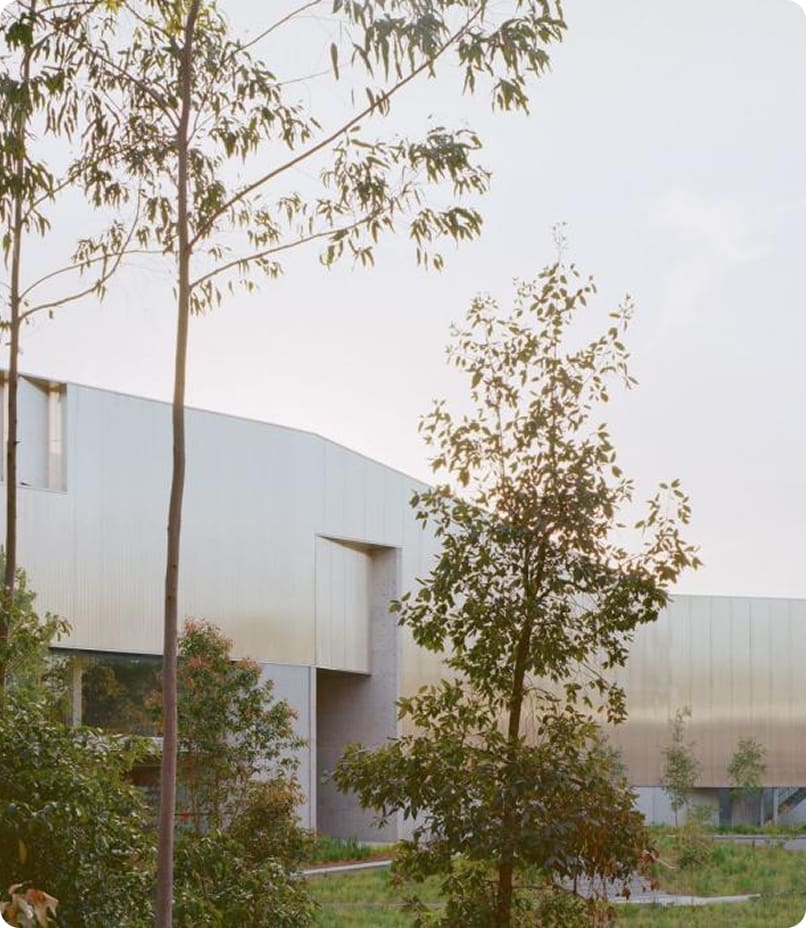
An example of this is the Advanced Manufacturing Research Facility (AMRF), pictured below, in Western Sydney’s Bradfield City Centre. Northrop and the build team used locally sourced mass timber to reduce embodied carbon, added a lightweight green roof to improve insulation, and integrated a solar array to support day-to-day operations, all while targeting a 6-star Green Star rating.
Likewise, Scape Victoria Street in Melbourne, a 24-storey, 533-bed student accommodation tower, Northrop helped deliver a 5-Star Green Star sustainability rating despite a fast-tracked, COVID-era program and a complex site with an old petrol station to remediate. The project went on to win Best Student Accommodation Development at the 2024 PropertyGuru Asia Property Awards, proof that high-performance outcomes and tight timelines aren’t mutually exclusive.

While not Passivhaus certified, these projects demonstrate examples of broader strategies that can improve environment performance, operational efficiency and long-term value.

Events like THRIVE26 reflect a wider shift already underway, designers, builders, advocates and researchers not just learning how these principles can be applied, but actively driving that application forward, project by project. The gap that once made high-performance buildings feel out of reach is closing, making high-performing, energy-efficient, comfortable buildings with long-term value more achievable than ever.

Get to know Shanica

Shanica is a sustainability leader, dedicated to shaping inclusive, climate-positive environments. She is the Victorian Chapter Co-Chair of the Australian Passivhaus Association and was the emcee for the recent THRIVE26 conference.

You can find out more about Shanica here.

Header image: Shanica Saenrak Hall with Ken Long, Lendlease, co-emcee’s at the recent Australian Passivhaus Association’s event, Thrive 2026. Photo credit to Shaun Knott.

Back to all news

Related news

Huntlee: Why long-term partnerships are critical for long-term project success

In a significant achievement for Australian public architecture, Powerhouse Castle Hill has been awarded the Sir Zelman Cowen Award...

Read More

CROSS – The much-needed change for our industry

Director of Northrop and Structural Engineer Karlie Collis, also sits on the Board of Collaborative Reporting for Safer Structures...

Read More

Early Careers & Associates Day

As part of the ongoing career journey at Northrop, we recently hosted in person learning, networking and development days...

Read More
Blog 1

Powerhouse Castle Hill wins prestigious national architecture award

In a significant achievement for Australian public architecture, Powerhouse Castle Hill has been awarded the Sir Zelman Cowen Award for Public Architecture...

Read More
View all news
Back to top